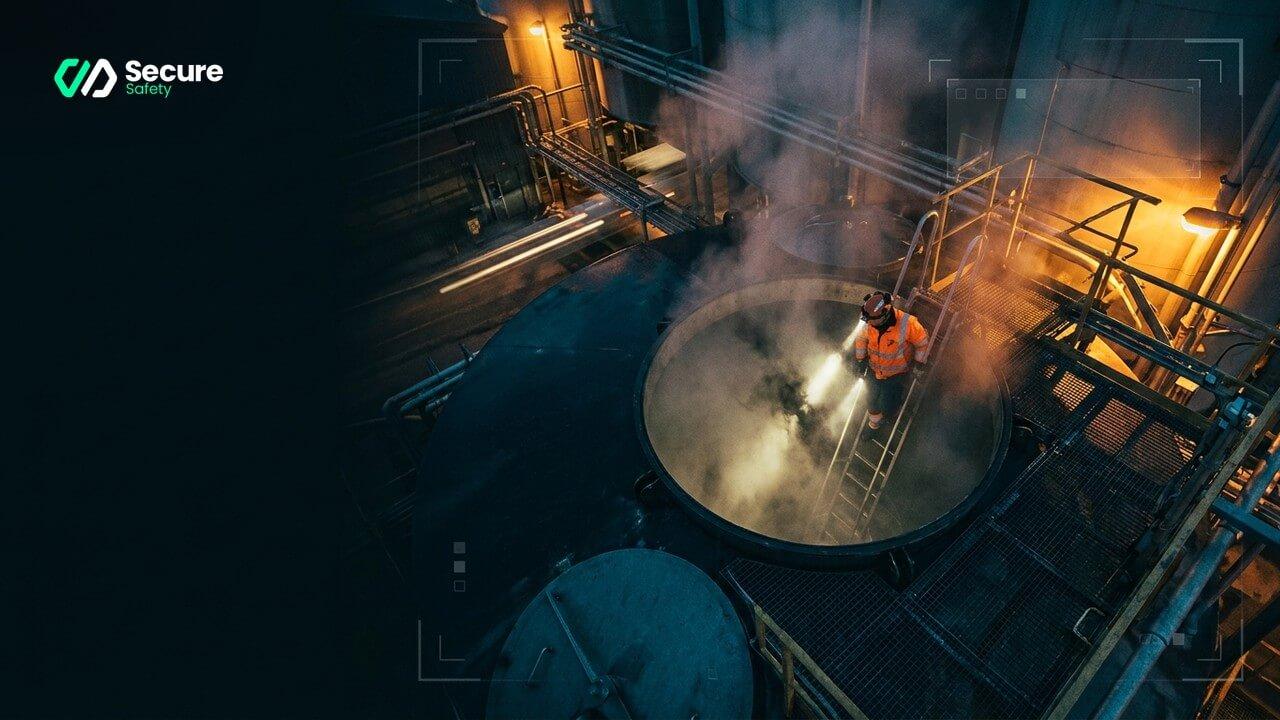
Every safety officer knows the particular quiet of a confined-space job. The permit is signed. The atmosphere has been tested. The attendant is posted at the manhole, clipboard in hand, watching a man disappear into a tank, a silo, a sewer, the belly of a vessel. For the next two hours, the only thing standing between that worker and disaster is a colleague at the rim who must stay alert, stay put, and stay reading the situation correctly — through fatigue, through noise, through the small distractions that visit anyone who stands still for long enough.
Confined spaces kill people who did almost everything right. The paperwork was in order. The training was current. And still, roughly six in ten confined-space fatalities are would-be rescuers — the attendant or a passer-by who saw a collapsed colleague and went in after them, straight into the same invisible atmosphere that felled the first. A permit is a decision made before entry. It cannot see what happens after.
The gap between the permit and the peril
Permit-to-work is one of the finest control systems industry has ever devised. It forces a pause, a checklist, a signature, an accountable authoriser. For the moment of authorisation, it is close to perfect.
But a permit is a document, and a confined-space entry is a live event that unfolds over hours. The gas that tested clean at 9 a.m. can shift when a valve upstream is opened. The single authorised entrant can become two when a helper leans in to pass a tool. The attendant who was posted at the opening can drift twenty metres to deal with a delivery. None of these is a failure of intent. They are failures of continuous attention — and continuous attention is precisely what human beings are worst at.
This is the space where paperwork ends and vision must begin. Not to replace the permit, but to enforce it, second by second, for as long as the job is open.
What constant eyes actually watch for
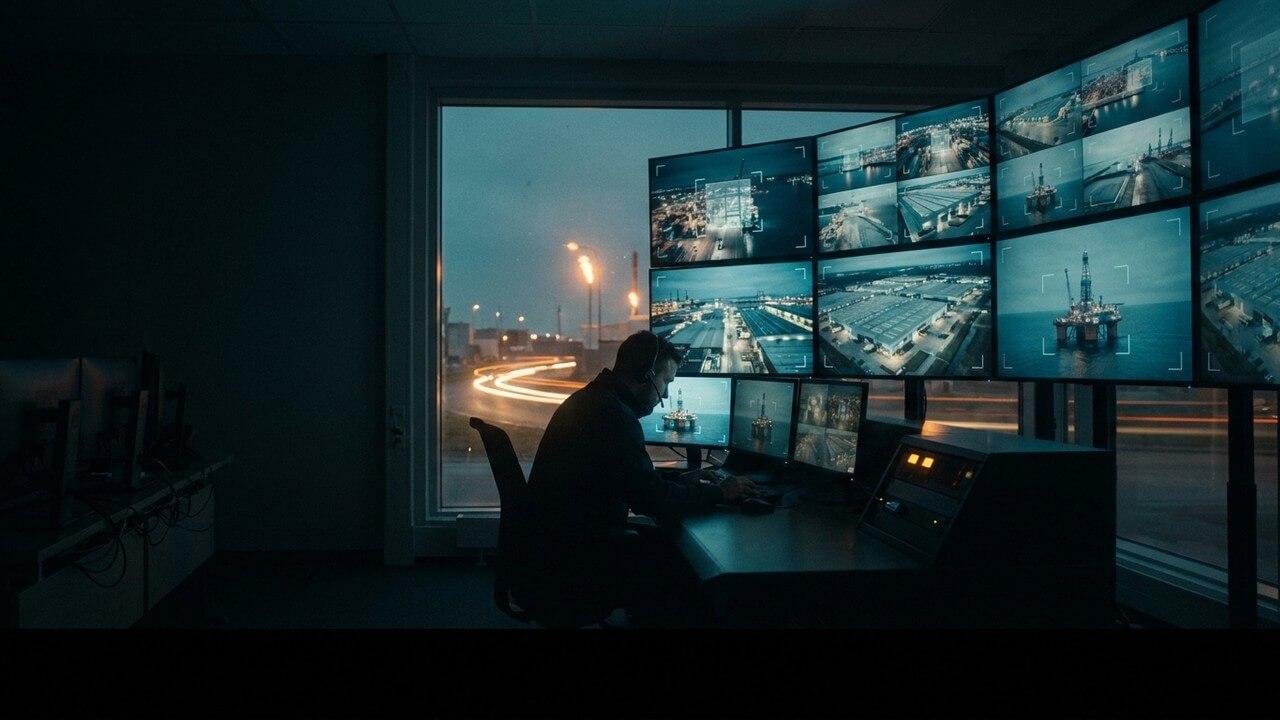
An AI monitoring layer sits on the cameras you already have trained on the entry point. It does not tire, it does not look away, and it does not need to understand the job to notice when the job goes wrong. On a confined-space entry, it holds a handful of simple truths and raises the alarm the instant one breaks.
Who is inside, and are they still upright
The system counts entries and exits at the portal, so the number of people below is never a matter of memory. If an authorised entrant descends and a second, unbadged worker follows, that is flagged before both are out of sight. And if a person inside the frame goes to the ground and stays there — the posture of collapse, not the crouch of work — a person-on-ground alert fires in real time. This is the same fall-detection capability that watches for a felled worker on any floor, applied to the one place where a fall is most likely to go unseen.
Is the attendant at their post
A confined-space attendant who leaves the opening has, in that moment, dissolved the entire rescue plan. The system knows where the attendant should stand and notices when that station goes empty. A restricted-zone rule works in reverse here: instead of warning when someone enters a forbidden area, it warns when someone leaves a required one.
Is the entry authorised at all
Tie the camera to the permit and the logic becomes powerful. Outside a live permit window, the confined-space opening is simply a red zone — any approach or entry is an exception worth a supervisor's attention. The moment a valid permit opens, the same portal becomes a monitored worksite with its own rules. The camera enforces the paperwork it can see.
Forged where the margin for error is zero
This detection was not built in a laboratory. It was proven offshore, on drill floors — heavy moving steel, no tolerance for error, lives in the balance every shift — and in the moonpool, the open shaft in the middle of a rig where equipment passes through to the sea below. A moonpool is a confined-space problem turned inside out, and monitoring it is genuine unclaimed ground in this industry. From there the same platform went on to a national oil major's operations, a major international port and an international airport, running at a sub-0.05% error rate and, in field measurement, cutting unsafe behaviours by around 90%. A system that can hold its nerve above a hole in the ocean can manage a fixed tank hatch on solid ground.
When seconds are the whole story
The arithmetic of confined-space emergencies is measured in minutes. An atmosphere that goes bad does not announce itself; a worker can lose consciousness before they know anything is wrong, and injury begins within a few minutes of that. Every second the alarm is delayed is a second subtracted from the rescue.
A human attendant, at their best, raises the alarm when they notice. An AI layer raises it when it happens — the moment the entrant hits the deck, the moment the attendant's post falls empty, the moment an unauthorised body crosses the portal. That difference, often tens of seconds, is frequently the difference between a rescue and a recovery. And because the alert is specific — who, where, what — the response begins with information rather than a frightened shout.
On-premise, because trust cannot leave site
Confined-space work happens in the most sensitive corners of a plant, and the footage of it never leaves your site. The detection runs on-premise, on your own hardware, behind your own firewall. No stream to a third-party cloud, no video of your operations sitting on someone else's server. The intelligence comes to your cameras; your images stay where they belong.
The permit gets you in. The eyes get you out.
A permit-to-work system decides whether an entry should happen. It was never designed to watch the entry unfold, and asking a single tired attendant to be a flawless sensor for two hours has always been the quiet weakness in an otherwise excellent process. Continuous machine vision closes that gap — not by removing the human, but by giving them a partner that never blinks.
Your cameras are already pointed at the hatch. They could be watching for the one moment that matters.
Confined space monitoring: the technology requirements that make it different
Why confined spaces are the highest-risk lone-worker scenario
Confined space incidents are disproportionately fatal. The Confined Spaces Regulations 1997 require a rescue plan as a condition of entry, and the reason is stark: a worker who becomes incapacitated in a confined space cannot be rescued by an unprotected rescuer without risking a second casualty. Multiple fatalities from confined space incidents — where the second and third deaths were rescuers — are recorded in the HSE data. The rescue plan, and the monitoring that supports it, must be in place before entry, not assembled in response to an alarm.
The atmospheric monitoring gap
Cameras cannot see gas. The atmospheric hazards in a confined space — oxygen deficiency, toxic gases, flammable atmospheres — are invisible to camera-based detection. This is a genuine limitation that must be addressed by the complementary wearable and IoT monitoring layer. Wearable multi-gas monitors worn by entrants provide continuous atmospheric monitoring and alarm on any exceedance; fixed IoT atmospheric sensors at the entry point add a second layer. Camera monitoring at the entry point verifies the entry procedure, confirms PPE compliance, and provides man-down detection for workers inside the visible camera zone.
Permit-to-work integration
Confined space entry is controlled by permit-to-work in most industrial environments. The AI monitoring layer at the confined space entry point can be integrated with the permit system to confirm that entrants are following the permitted procedure: correct PPE, correct entry sequence, correct attendant presence at the entry point. A permit-to-work verification check at the entry point — camera-based PPE compliance combined with count verification — adds a continuous control that supplements the paper permit.
Implementation checklist for confined space monitoring
- Atmospheric monitoring integration: confirm that wearable or fixed atmospheric monitoring devices are in place and integrated with the platform before any confined space entry monitoring is configured — camera-based monitoring is not a substitute for atmospheric detection
- Entry point camera placement: the entry point camera must have a clear view of the entry hatch, the attendant position, and the personnel entering and exiting — confirm this during Discovery before configuring the entry count monitoring
- Entrant count tracking: configure the zone count at the confined space entry to track the number of entrants currently inside and alarm if the count changes unexpectedly (someone enters or exits without a permit-controlled reason)
- Rescue equipment monitoring: where rescue equipment is stored adjacent to the entry point, camera monitoring of the storage location can confirm that equipment is present and accessible before entry begins
- Night and out-of-hours entry procedures: confirm that the monitoring configuration applies to out-of-hours entries with the same completeness as daytime entries, and that the alert escalation chain for out-of-hours incidents reaches an appropriate responder in a timeframe consistent with the site's rescue plan
See what your cameras have been missing — book a demo.