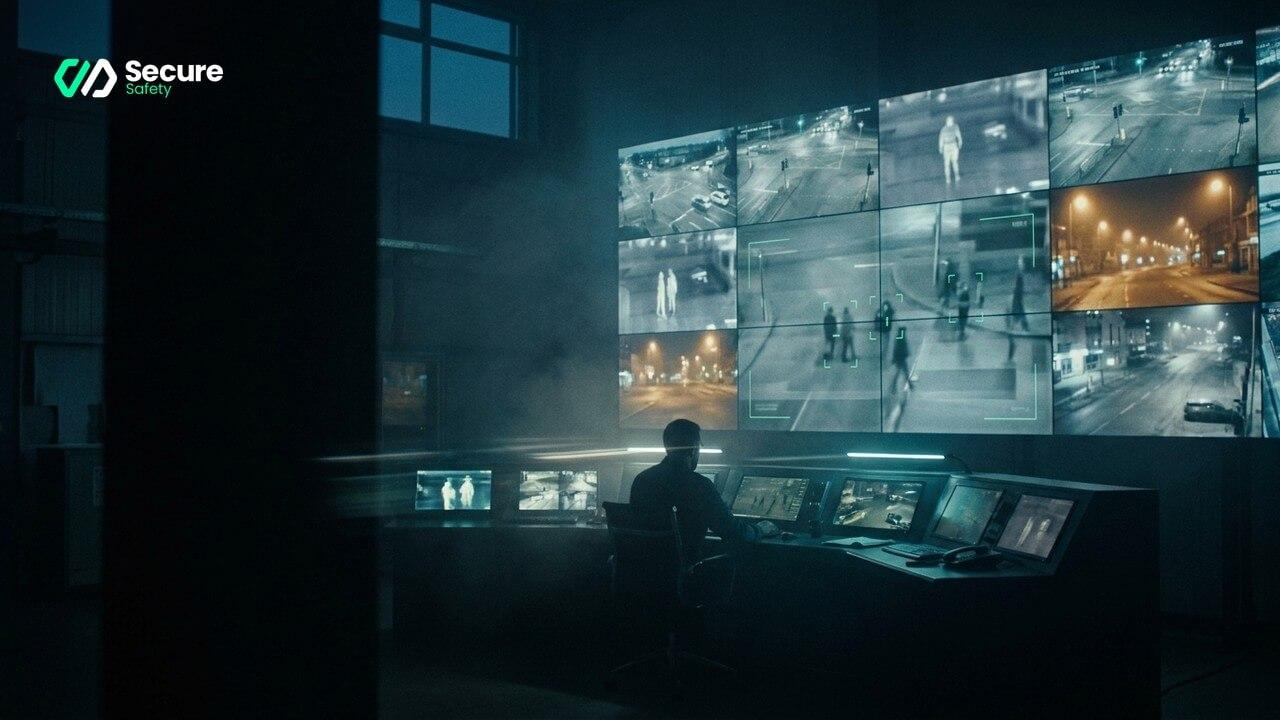
The questions we hear before every demo.
How SecureSafety works, where the video goes, what it detects, and how fast it deploys. These are the practical answers safety and IT teams need first.
Straight answers to the questions that matter first.
Most safety and IT teams have the same questions before they invest time in a demo: does it run on the cameras they already have, where does the video go, how accurate is it, and how quickly could it actually be live.
SecureSafety was built on offshore oil and gas drilling rigs, the world’s most demanding safety environment, and has run there since 2018 at a sub-0.05% error rate. The questions below are answered from that operational experience, not from a product brochure.
Everything you need to scope it.
Do I need to install new cameras to use SecureSafety?
No. SecureSafety runs AI detection on the CCTV cameras you already own, turning existing footage into real-time hazard alerts. There is no rip-and-replace and no new hardware to begin.
Is the video processed on-premise or in the cloud?
All video analysis happens on-premise, on an edge device inside your own network. Raw footage never leaves your site, which keeps sensitive operational video secure and supports GDPR compliance from day one.
What workplace hazards can SecureSafety detect?
SecureSafety runs 90+ detectors covering vehicle-pedestrian conflicts, PPE non-compliance (helmets, hi-vis, gloves, harnesses), falls and people on the ground, fatigue, fire and smoke, restricted-zone and red-zone breaches, suspended loads, and offshore-specific hazards such as moonpool monitoring.
How accurate is it, and will it flood us with false alarms?
The engine runs at a sub-0.05% error rate. On a live offshore deployment it processes ~18,000 events a day, filtering out 99.76% of raw footage and surfacing only the ~0.23% that contains a genuine safety event. That is an alert crews trust rather than switch off.
Which industries is SecureSafety built for?
High-hazard environments with real camera estates: offshore oil & gas, ports and logistics, aviation, construction, industrial manufacturing, chemicals, warehousing and waste. Its detection pedigree was forged offshore, across ~half of a national drilling fleet.
How quickly can it be deployed?
Because it runs on your existing cameras, detection can be live in days rather than a year-long install. Every engagement starts with a fully-costed Discovery phase: a site survey, integration and security analysis, and a delivery plan.
How is SecureSafety different from a generic AI camera tool?
It was hardened in offshore oil & gas, the world’s most demanding safety environment, and runs there today at fleet scale. That depth of real industrial hazard detection is what sets it apart from generic video analytics. As health and safety software it strengthens health and safety management across the organisation: an on-premise platform with a 90+ detector library that arrives already proven, not in a pilot.
Which VMS or NVR systems does SecureSafety integrate with?
The platform ingests standard RTSP streams from IP cameras, DVRs and NVRs — including Milestone, Genetec, Avigilon, Hanwha, Axis and Hikvision systems, among others. It connects over your local network without requiring changes to your existing VMS configuration. Detections can be forwarded back to your VMS as events, and the platform integrates with PA speakers and wearable devices. Specific compatibility is confirmed during the Discovery phase.
How long is footage retained, and what are the GDPR and DPIA implications?
Raw video is processed on-premise and is never transmitted off-site. Retention of raw footage is governed by your existing data retention policy — SecureSafety does not change that. The platform retains detection metadata (timestamps, categories, camera references and short event clips) for the period you configure. A DPIA is recommended for any AI video surveillance deployment under UK GDPR, and SecureSafety provides documentation, a data flow map and a privacy impact template to support that process as part of the Discovery phase.
How are the detection models kept accurate over time and as the site changes?
Model accuracy is maintained through continuous retraining on site-specific footage as part of the ongoing subscription. When new hazard types are added, site layouts change, or camera positions are updated, the models are retrained and validated before deployment. The sub-0.05% error rate is not a launch-day figure — it reflects the performance standard maintained across live deployments through ongoing retraining cycles.
What does the pricing model look like — is it per camera, per site, or per hazard type?
Pricing is scoped per site during the Discovery phase, based on camera count, hazard complexity and required integrations. There is no per-alert or per-detection charge. Most clients structure the engagement as a fixed Discovery fee followed by an annual subscription covering the platform licence, model retraining and support. A board-ready cost breakdown is a standard deliverable of the Discovery phase.
Can the platform manage multiple sites from a single interface?
Yes. Each site runs its own on-premise edge device, which processes video locally. The platform includes a multi-site management view that consolidates alerts, compliance data and safety performance metrics from all connected sites into a single dashboard for a central safety team. This is how fleet-wide deployments — such as the national drilling fleet we monitor — are managed at scale.
What camera resolution is required for reliable detection?
The models are engineered to operate on standard IP camera feeds at resolutions commonly deployed on industrial sites — typically 2MP to 8MP at normal field-of-view distances. Performance at the margins (very long camera-to-subject distances, heavily compressed streams, or extremely low-light conditions) is assessed during the Discovery phase. In most cases, the cameras already on-site are sufficient without upgrade.
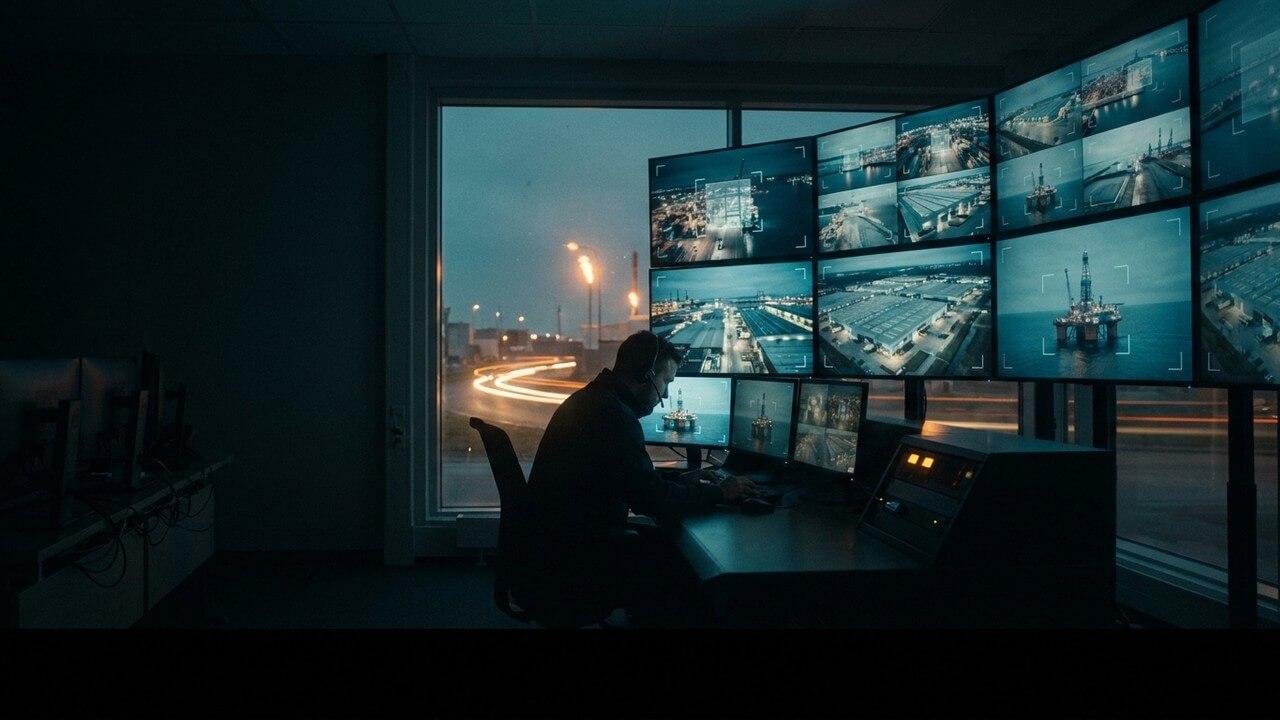
Ask us on a live deployment.
Book a short demo and we’ll answer anything specific to your site, cameras and hazards. Then scope it with a fully-costed Discovery phase.