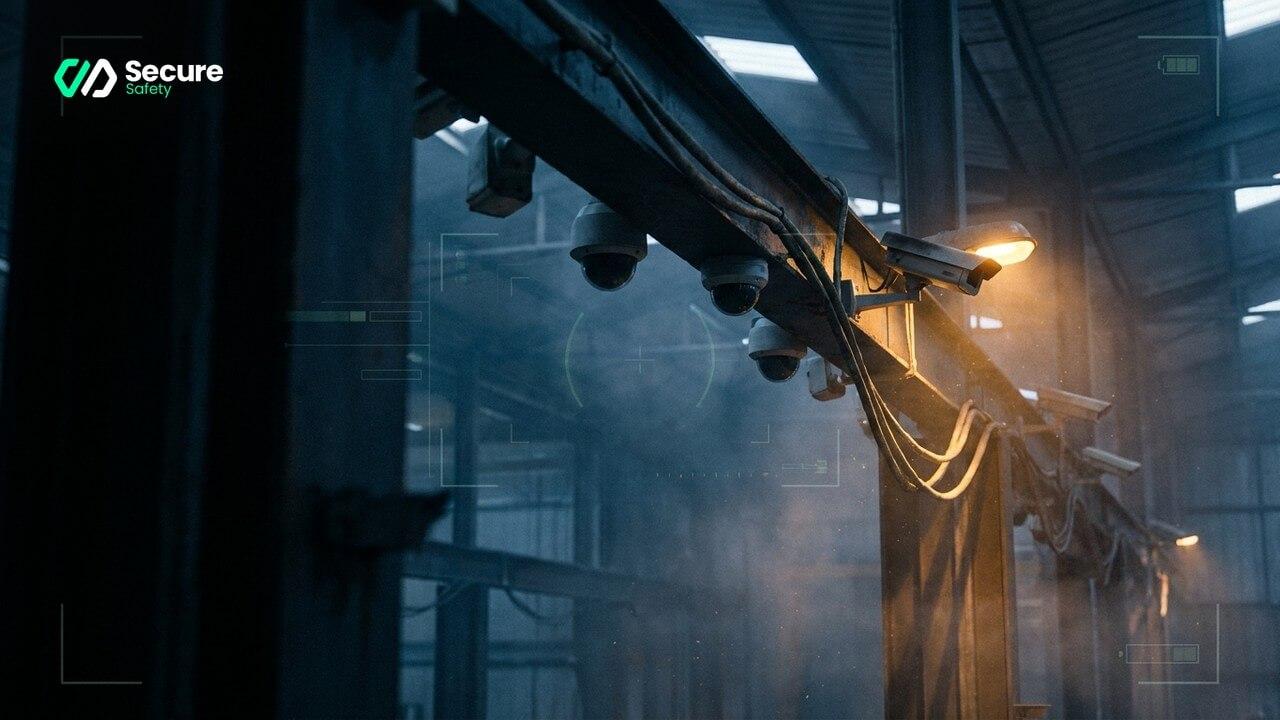
AI safety monitoring vs manual CCTV review.
Why human monitoring at scale is impossible, and what AI changes.
The difference AI makes.
| Manual CCTV | SecureSafety AI | |
|---|---|---|
| Coverage | A handful of feeds watched at once; most cameras unwatched. A single rig generates 430+ hours of video a day. | Every camera, every feed, watched simultaneously, 24/7. |
| Attention | Human attention degrades within ~20 minutes of watching monitors. | Constant, consistent detection. No fatigue, no blind spots over a shift. |
| Response | Reactive: footage is usually reviewed after an incident, as evidence. | Proactive: alerts the moment a hazard develops, before contact. |
| Consistency | Varies by operator, shift and workload; rules applied unevenly. | The same rules applied identically to every worker, every shift. |
| Cost | Salaries, benefits, 24/7 coverage, team management — more cameras mean more staff. | Fixed licence cost plus edge hardware. Scales cameras without scaling headcount. |
| Evidence | Dependent on someone having been watching when the event occurred. | Every event logged, timestamped, camera-referenced and stored automatically. |
What safety teams ask about this.
Can't we just hire more monitoring staff to achieve the same coverage?
Adding headcount scales linearly: more cameras require proportionally more people, and the fundamental limit of human attention still applies. Research on vigilance tasks shows that attention to a monitoring screen degrades significantly within 20 minutes of sustained watching. AI doesn't have this constraint: every camera is watched at every frame, at the same sensitivity, 24/7.
Does AI safety monitoring replace the security or safety team?
No. AI watches feeds and surfaces events that require a human decision. It removes the burden of watching 99.76% of footage that contains nothing, so your team spends its time on the ~0.24% that does.
With manual review, at least we avoid false alarms. Does AI create more noise?
The opposite. Manual review creates missed events. SecureSafety runs at a sub-0.05% error rate, which means fewer than 1 in 2,000 alerts is a false positive. The comparison is not fewer false alarms under manual review; it is fewer missed real events under AI.
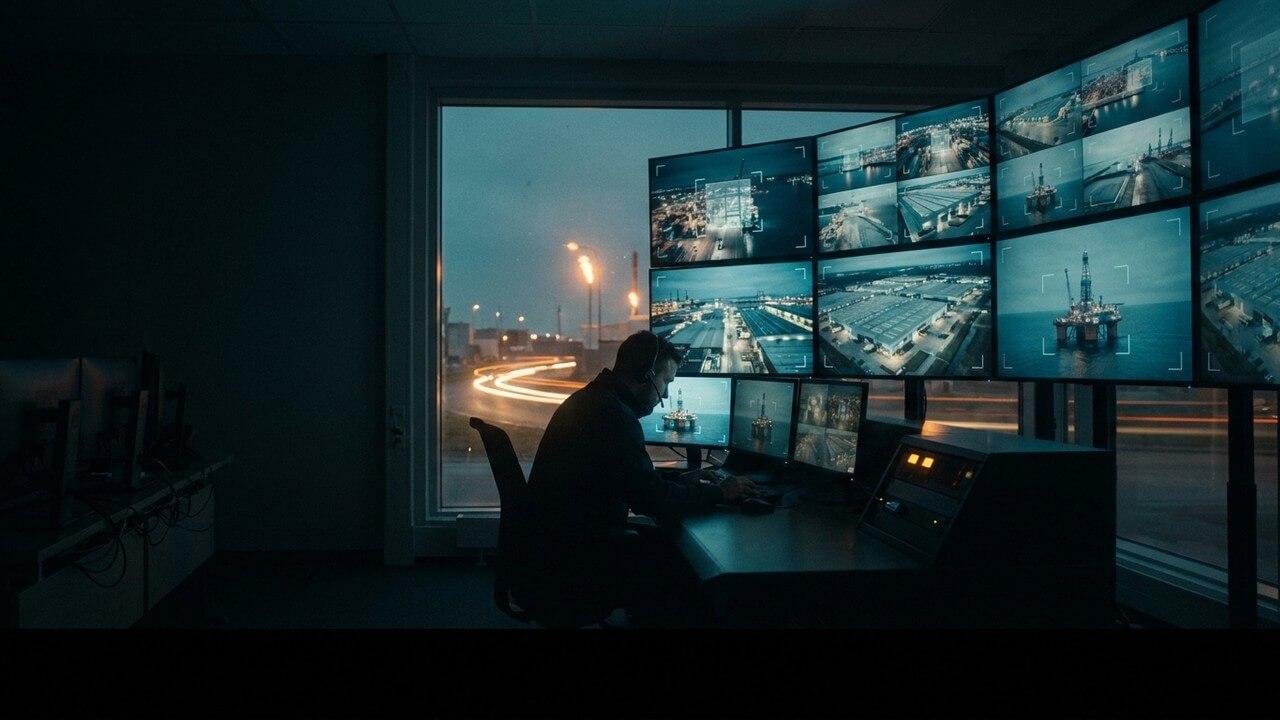
Safety AI that works on your existing cameras.
Book a demo and we'll show SecureSafety running on a live deployment — no slides, no simulations.