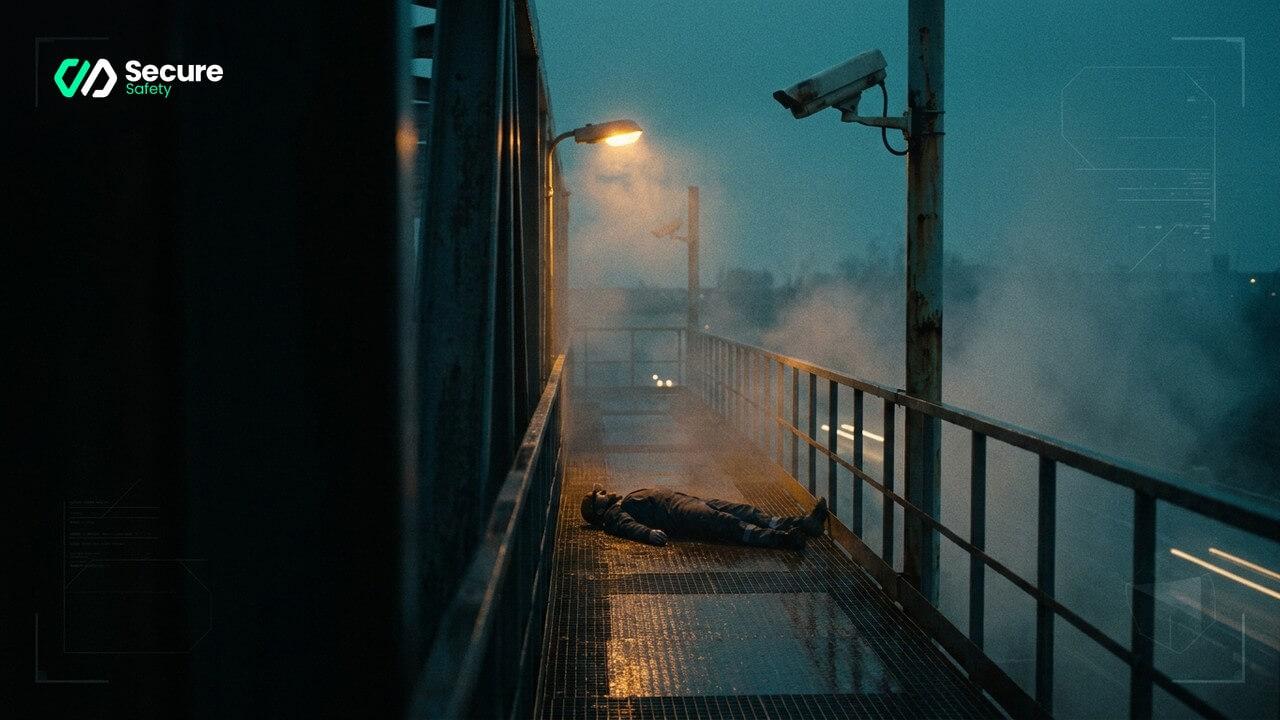
People, falls & behaviour. The leading indicators of an incident, seen early.
A person on the ground, a lone worker who has stopped moving, fatigue at the controls, crowding at a choke point. The AI surfaces the human signals that precede a serious incident, so a supervisor can act while it still matters.
The hazard
Falls are the second-leading cause of workplace fatality in the UK, and the most undercounted: every "slip on the way out" that goes unreported is a near-miss the organisation never learns from. The greater problem is that falls and person-on-ground events are rarely visible when they happen. A worker who goes down in an aisle, a storeroom, or a blind spot on a large site may lie undiscovered for minutes while their condition deteriorates.
Behavioural signals precede most serious incidents. Fatigue at the controls of heavy machinery, inattentiveness near moving equipment, loitering in a high-risk area — these are observable patterns that experienced safety managers recognise on a walk-around but cannot monitor continuously across a full site. Camera-based AI closes that gap, watching every frame of every feed without blinking.
Lone-worker protection is the area where automated monitoring saves lives most directly. A worker operating alone, without a check-in system and out of camera view, is the scenario most likely to result in an undiscovered fatality. SecureSafety combines camera detection with wearable signals and check-in logic to hold a live thread on every lone worker across your site.
From camera to alert in under a second.
Person-on-ground events are flagged within seconds
The platform distinguishes a person who has fallen from someone crouching or sitting. A body position that matches a fall event, sustained for more than a configurable dwell time, fires an alert to the control room with camera reference and clip. Response can begin before the person has time to raise an alarm themselves.
Behavioural patterns surface before an incident occurs
The AI monitors posture, attention and movement in configured zones: operator fatigue at a machine station, someone running near a hazardous area, or loitering in a location that indicates confusion or distress. These leading-indicator detections give supervisors the window to intervene before a near-miss becomes a reportable event.
Lone workers are tracked and checked automatically
Workers assigned to lone-working areas are given a check-in interval. If a check-in is missed, a camera trigger or a wearable man-down signal fires the alert. Every lone-worker status is visible on the live site map in the control room, removing the blind spots that make lone-working the highest-risk category.
Behaviour detection and lone-worker monitoring were developed under the most demanding conditions: offshore drilling rigs where a worker lost in a remote section of a vessel, or overcome by fatigue at a critical control point, can become a fatality before a supervisor reaches them. The same models run in ports, airports and industrial sites across the UK.
What people ask about this detector.
How quickly does a fall alert reach the control room?
Person-on-ground detection fires within one to two seconds of the event being confirmed. The alert includes the camera, timestamp, and a short clip so the control room can assess the situation before dispatching response. Configurable dwell time prevents false alerts from workers crouching intentionally.
Can the system detect fatigue or distraction at machinery?
Yes. The platform monitors attention state and posture at operator stations. A worker who is looking away from a hazardous machine for a sustained period, or whose posture indicates fatigue, triggers a behavioural alert. This is particularly effective at conveyor control stations and vehicle operation areas.
How does lone-worker monitoring work when the person is out of camera view?
Where cameras cannot reach, the platform integrates wearable safety smartwatches and BLE beacons. These continue the check-in loop and provide man-down and no-motion detection for workers in blind spots, confined spaces, or unmanned areas. The camera layer and wearable layer are unified on the same live map.
Does this work in low-light or night-shift conditions?
The models are tested across the lighting conditions typical of industrial night shifts, including infrared camera feeds and partially lit areas. Specific camera performance is reviewed during the Discovery phase to confirm detection accuracy on your infrastructure.
How does the system distinguish a real fall from someone crouching to work or doing maintenance on the floor?
Body position analysis identifies the posture and orientation of a person relative to the ground. A genuine fall typically produces a rapid change from vertical to horizontal posture, followed by sustained ground contact without the controlled deliberate movements of someone working. The dwell-time threshold — configurable per zone — prevents alerts from brief intentional ground contact. Zones where floor-level maintenance is common are configured with an extended dwell time or a specific exclusion during maintenance windows.
Can the system detect a medical episode such as a cardiac event, as distinct from a slip or trip fall?
The platform detects any person-on-ground event consistent with a fall, regardless of cause — including sudden collapse from a medical episode. It does not diagnose the cause, but the alert and the clip it provides give the responding supervisor enough information to determine whether the situation is a medical emergency or a minor slip. The speed of that determination is the critical factor in outcome, and it is what automated detection provides.
What are the check-in intervals for lone workers, and who receives the alert when a check-in is missed?
Check-in intervals are configurable per worker category and zone — typically ranging from 15 minutes for standard lone working to 5 minutes for high-risk lone working in confined spaces or remote locations. A missed check-in escalates through the configured alert chain: first to the control room, then to a nominated supervisor if not acknowledged within a configurable period. The escalation chain and timeouts are defined during the Discovery phase.
Can the system detect crowding at a choke point before it becomes a crush hazard?
Yes. People-counting logic monitors the number of persons in defined zones and fires an alert when the count exceeds the configured limit. For areas with crush risk — emergency muster points, narrow access routes, stairwells — this provides an early warning before a dangerous accumulation of people develops. The same logic is used for drill-floor occupancy monitoring on offshore rigs.
Is there an alert for a worker who stops moving in a hazardous area — no-motion detection?
Yes. The no-motion detection function flags a person who has been stationary in a hazardous area for longer than the configured threshold without generating a voluntary check-in. This covers the scenario of a worker who has become unwell but has not fallen — still vertical but not moving or responding. It is particularly effective in areas where a person stopping is inherently abnormal.
How does the system handle large sites where lone workers may be in areas with no camera coverage?
Where cameras cannot reach, the platform integrates wearable safety smartwatches and BLE beacon infrastructure. The wearable provides man-down detection, no-motion detection, panic alarm, and location tracking independent of camera coverage. The camera and wearable layers are unified on the same live site map in the control room, so there are no blind spots in the lone-worker coverage picture.
Can the system detect a worker who has become incapacitated at their workstation but has not fallen to the ground?
Yes. No-motion detection monitors a worker who is stationary at a machine station or in any designated monitoring zone and flags the situation when the worker has been stationary for longer than the configured dwell threshold without generating a voluntary check-in signal. This covers the scenario of a worker who has become unwell or incapacitated but has not fallen — still sitting or standing but unresponsive. The no-motion threshold is configurable per zone to reflect the normal working patterns in each area: a conveyor monitoring station where stationary operation is normal has a longer dwell threshold than a zone where standing still is inherently abnormal.
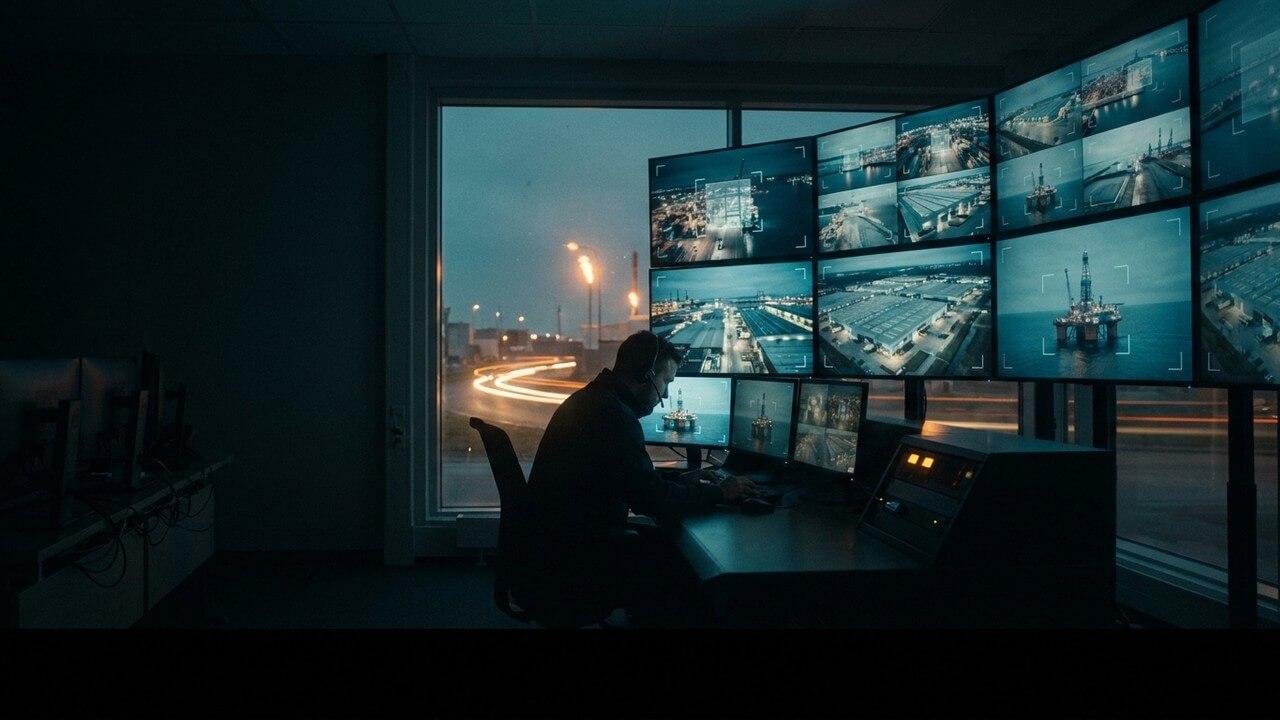
Tell us the hazard. We'll detect it.
Book a demo and we'll show the detectors running live, on-premise, and scope the ones that fit your site.