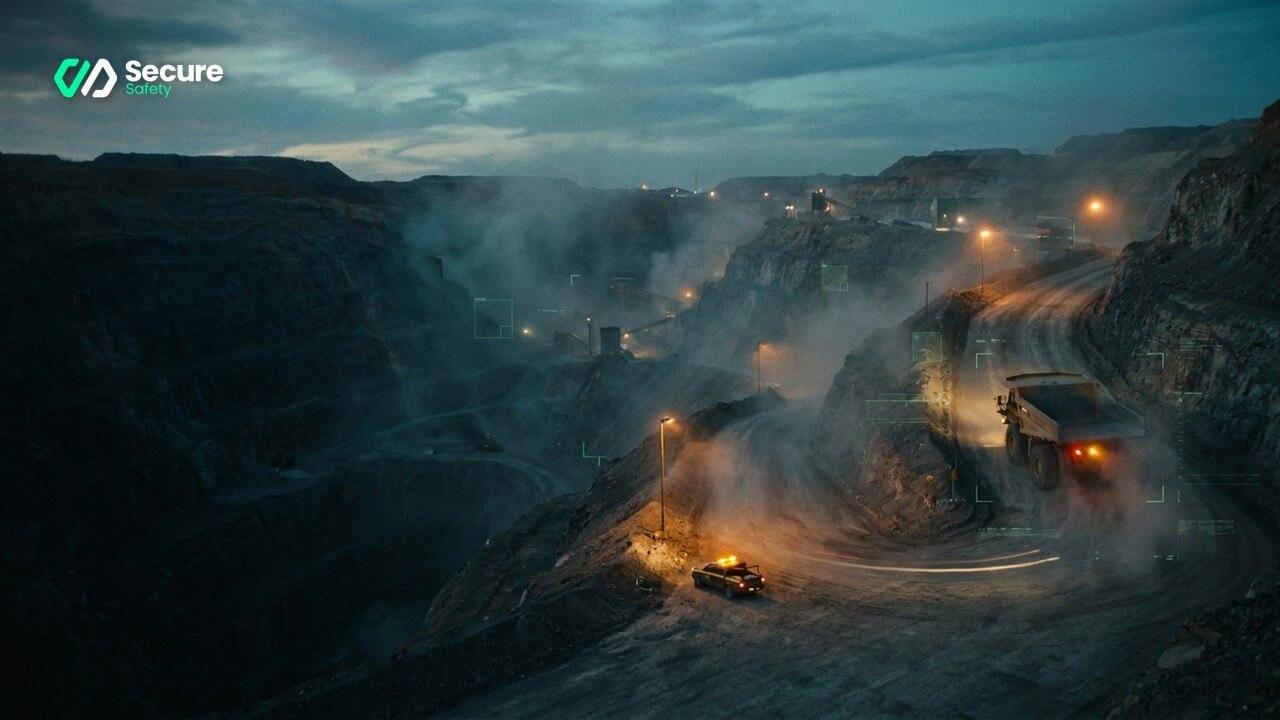
Every mine manager knows the shape of the near miss. A haul truck the size of a two-storey house backs away from the tip, its driver sitting four metres up in a cab with blind spots you could park a pickup in. Somewhere below and behind, a light vehicle noses across the haul road at exactly the wrong moment. Nothing happens. This time. The truck rolls on, the pickup carries on, and the only record of how close it came is a quickened pulse and a story told at shift change.
Mining runs on those stories. The industry has spent a century engineering out the obvious killers — better ventilation, better ground support, better trucks. What remains is harder to see: the split-second interaction between a person and a machine that outweighs them by 400 tonnes. These are the events that hurt people, and they are the events a camera can catch and a human monitor cannot.
The hazards that hide in plain sight
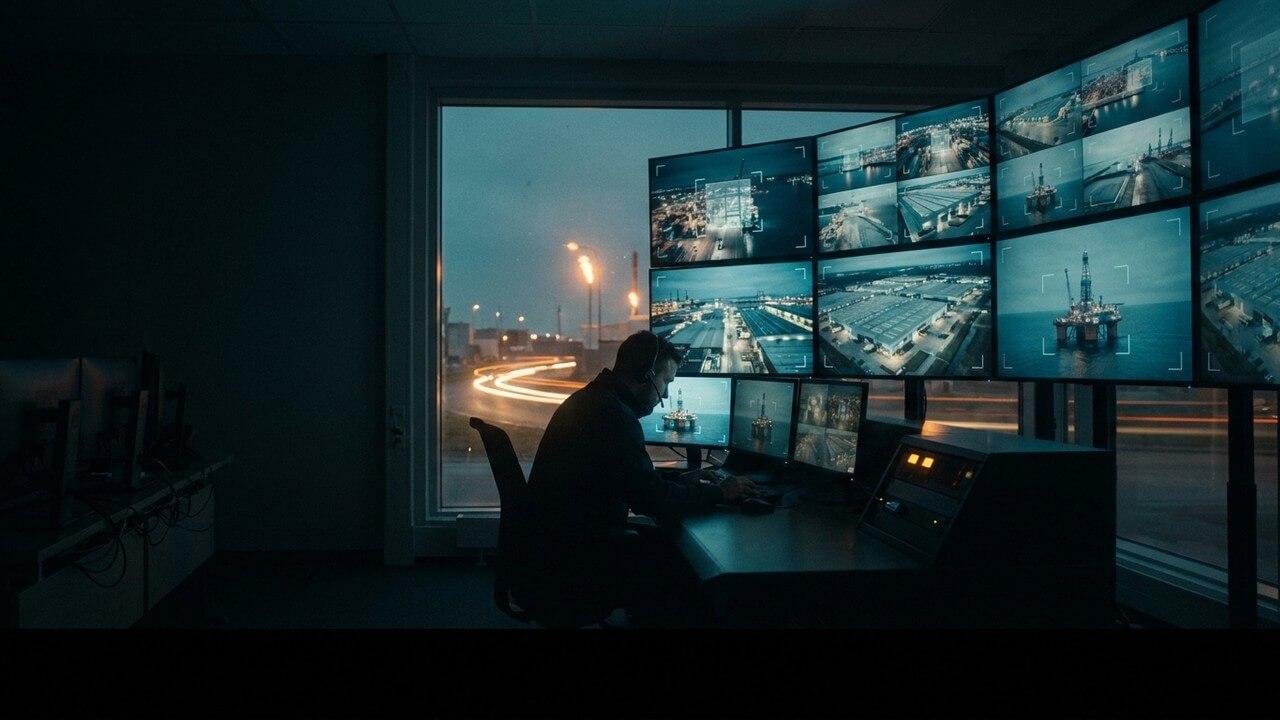
A modern mine is already watched. There are cameras on the pit rim, on the crusher, at the portal, in the underground substations and along the decline. Most of that footage is never looked at until after something has gone wrong. It exists to explain the incident, not to prevent it.
That is the waste SecureSafety was built to end. Our platform is a computer-vision layer that sits on top of the cameras you already own. No new hardware on the pit floor. No rewiring the decline. It watches every feed at once, continuously, and it does not blink, get bored, or look away to answer the radio.
For mining, four interactions matter most.
Haul truck and pedestrian conflict
Vehicle interaction is the single largest cause of fatalities in surface mining. The physics are unforgiving: a haul truck cannot stop quickly and cannot see close in. SecureSafety tracks the position of light vehicles, machines and people in the same frame, understands when a pedestrian or a small vehicle has entered the path or blind spot of a large one, and raises an alert in the moment the geometry turns dangerous — not in the incident report afterwards.
Restricted and exclusion zones
Every mine has ground nobody should be standing on: under a suspended load, near a highwall, inside the swing radius of an excavator, at the edge of the tip. Draw the zone once on the camera view and the system holds the line for you, flagging any person who crosses it, day or night, shift after shift.
PPE compliance underground and on surface
Hard hat, hi-vis, safety glasses. The rules are simple; enforcing them across a distributed site with hundreds of workers is not. The platform verifies that the people in frame are wearing what the task requires, and surfaces the exceptions instead of the thousands of compliant moments in between.
Fall and person-on-the-ground detection
A worker down on a walkway, at the base of a ladder, on the muck pile — in a remote heading, minutes matter. SecureSafety recognises a person who has fallen or is lying motionless and escalates immediately, so a collapse is not discovered at the end of the shift.
Why underground is the hard case
Anyone can demonstrate detection in a clean, well-lit warehouse. A mine offers none of those courtesies. Underground you have dust that scatters light, headlamps that flare the sensor, water on the lens, diesel haze, and illumination that ranges from floodlit to almost nothing. In the pit you have glare, heat shimmer and a horizon of ochre dust that swallows contrast.
This is exactly the environment that separates a real system from a demo. A model trained on tidy footage falls apart the first time a haul road kicks up a dust cloud. Ours was not trained on tidy footage.
The detection at the heart of SecureSafety was forged in offshore oil and gas, on the drill floor — the most demanding safety environment there is, where heavy equipment moves in tight spaces, the weather is against you, and there is no tolerance for error because lives are the stakes. It is proven in the operations of a national oil major, at a major international port and at an international airport, running at a sub-0.05% error rate and delivering field-measured reductions of around 90% in unsafe behaviour. A system that holds its nerve in sea spray and drill-floor spotlights is a system that holds its nerve in mine dust.
The footage never leaves the site
Mines are sensitive places — commercially, and often politically. The last thing an operator wants is a stream of camera footage of its people and its pit leaving the property for some distant cloud.
SecureSafety runs on-premise. The video is processed on site and stays on site. What leaves the system is not footage but signal: an alert, a timestamp, a count, a trend. That keeps you on the right side of your workforce agreements and your data obligations, and it means the platform keeps working when the satellite link to a remote operation drops, which it will.
From lagging to leading
The deeper prize is not the individual alert. It is the data underneath it.
Traditional mine safety is measured in lagging indicators — lost-time injuries, recordables, the numbers you report after harm has already been done. Continuous monitoring gives you the leading ones: how often light vehicles enter haul-truck blind spots at the north tip, which shift accumulates the most exclusion-zone breaches, whether a new traffic management plan actually changed behaviour on the ground or merely on paper. You stop managing safety by anecdote and start managing it by evidence.
Quarries and aggregate operations gain the same edge with far less overhead. The hazards are cousins of the mine's — mobile plant working close to people, edges and faces, conveyor and crusher zones — and the same camera-based approach turns a modest existing CCTV setup into a watchful safety system without a capital project to authorise.
What your cameras already know
The uncomfortable truth is that most mines already recorded their last serious near miss. The footage was there. Nobody was watching it in time. AI monitoring closes that gap — not by replacing the supervisor, the spotter or the traffic plan, but by giving them a tireless second set of eyes on every feed, every hour, and a voice loud enough to speak up before the geometry turns fatal.
AI safety monitoring in mining and aggregate operations
The three hazards that dominate mining fatalities
Analysis of the mining and quarrying fatality record consistently points to three hazard categories that account for the majority of deaths: being struck by moving vehicles or plant, falls from height, and being struck by falling or collapsing material. All three are addressable by camera-based monitoring.
Vehicle monitoring in open-cast mining and quarrying environments must account for the large, heavy and slow-manoeuvring equipment typical of these operations: dump trucks, loading shovels, drilling rigs and excavators operating in environments where pedestrian presence is legitimate and frequent. The approach zone monitoring that alerts when a pedestrian enters the operating radius of plant equipment is the most directly applicable capability.
Remote location considerations
Mining operations are often in remote locations with limited telecommunications infrastructure. On-premise processing is not just a privacy benefit in these environments — it is often the only technically viable architecture. A remote quarry with satellite or microwave backhaul connectivity cannot sustain a cloud-based video analysis workload; the edge processing architecture ensures that all detection and alerting operates independently of the site's backhaul connection.
Blast safety and zone clearing
The blast clearance verification requirement in quarrying operations is one of the most specific and high-stakes zone monitoring scenarios in any sector. The confirmation that the blast exclusion zone is clear of all personnel before detonation is a procedural requirement with zero tolerance for error. Camera-based zone monitoring at the blast perimeter provides a visual verification of zone clearance that the manual headcount procedure can miss. The resulting timestamped clearance log supports both the blast record requirement and the liability documentation that any post-incident investigation would examine.
Implementation checklist for mining and quarrying deployments
- Remote connectivity assessment: confirm the site's connectivity specification before specifying any system components — an on-premise deployment in a remote mining site has different network requirements than an urban industrial site
- Vehicle classification for large plant: confirm that the detection models have been validated for the specific vehicle classes on site — large open-cast mining vehicles have different visual characteristics from forklifts and HGVs in an urban logistics environment
- Blast zone configuration: define the blast exclusion zones in the camera configuration and confirm the activation and deactivation procedure with the blast manager
- Wearable monitoring for remote workers: identify all roles that involve working alone or in small groups in areas without camera coverage and specify the wearable monitoring approach for each
See what your cameras have been missing — book a demo.