A man went to work, did his job, and did not come home. Before anything else, that is what these cases are about. A delivery driver was fatally injured by a forklift truck, and in December 2025 Hessle Plant Ltd was fined £433,550 following the Health and Safety Executive's investigation.
No fine brings anyone back. But every one of these prosecutions carries a lesson that other operators can learn from, and the lessons are remarkably consistent. We write about them not to point fingers, but because the same failures recur on sites across the country. Most are preventable.
What happened
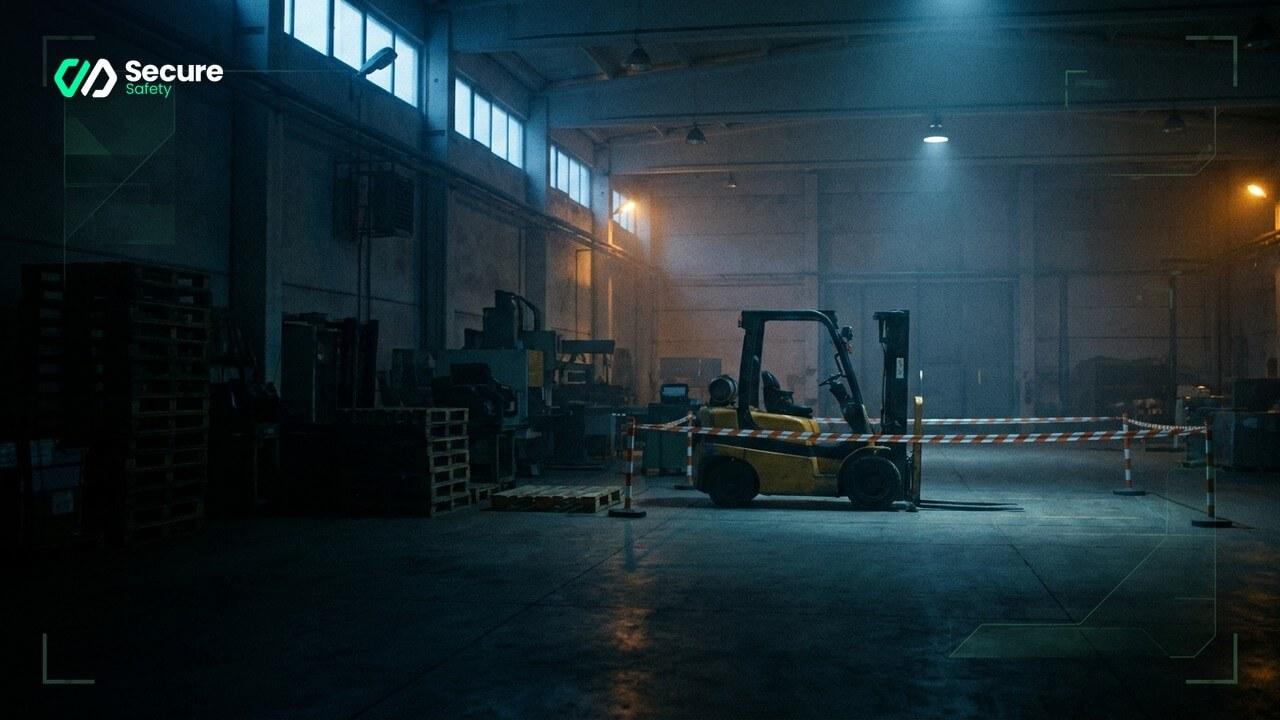
According to the HSE, the driver was killed in an incident involving a forklift truck, with the investigation highlighting shortcomings in how vehicles and people were kept apart and how equipment and operations were monitored. The court found the failings serious enough to warrant a fine well into six figures.
It is the most common fatal scenario in UK industry: a person and a moving vehicle occupying the same space at the same moment, with nothing in place to catch the conflict before contact.
The pattern the HSE keeps finding
Read enough of these prosecutions and the same themes appear again and again:
- People and vehicles sharing space without reliable separation at the critical point.
- Controls that existed on paper but weren't consistently enforced in practice.
- No real-time monitoring: incidents were reconstructed afterwards from CCTV, not prevented by it.
- Near-misses that went unrecorded, so the warning signs were invisible until the day they weren't.
That last point is the quiet tragedy. In almost every case, the same conflict had happened before, dozens of times, as a near-miss that nobody logged. The fatal incident was the first one that connected.
Where AI detection fits
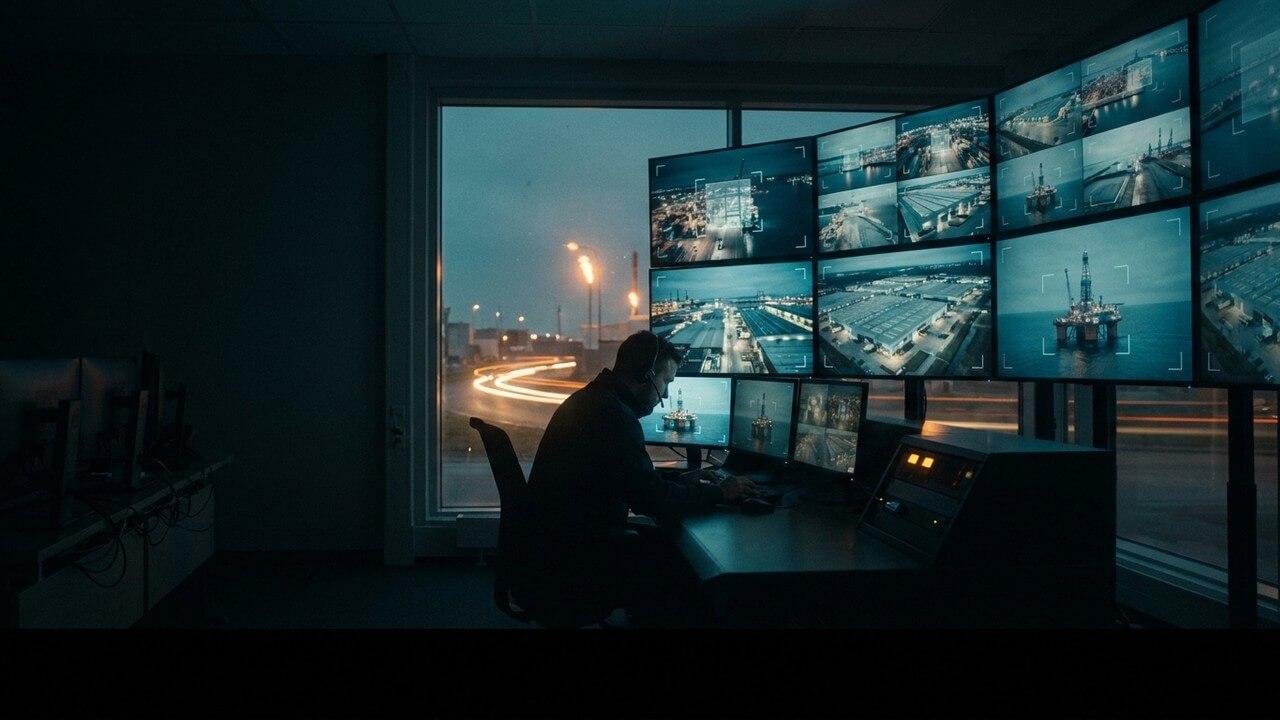
This is precisely the scenario SecureSafety is designed to catch. Running on a site's existing CCTV, the AI watches for the exact conditions that lead to vehicle-pedestrian fatalities:
- A pedestrian entering a forklift or HGV's path, flagged in real time.
- Unauthorised entry into a red zone around an operating or reversing vehicle.
- Vehicles moving too fast near people.
Each event raises an alert while it's still a near-miss. Just as importantly, it is recorded. Over weeks, that record reveals the specific corners, routes, and shift patterns where conflicts cluster, so the danger can be designed out before it becomes a statistic. It turns the invisible near-miss history into something a safety manager can actually act on.
The honest limits
We won't pretend technology alone would have guaranteed a different outcome. No responsible safety vendor should. We don't know every detail of this incident, and AI detection is not a substitute for safe systems of work, training, barriers, and supervision. It is a layer that makes those controls visible and enforceable in real time, and that catches the moments human attention inevitably misses.
What it does change is this: the camera over that loading bay stops being a passive recorder of tragedy and becomes an active warning system. That is a meaningful difference, and on a busy site it is the difference that matters.
A better business case than a fine
A £433,550 fine is the most expensive possible way to discover a safety gap. Detecting and closing it beforehand costs a fraction of that. And the only thing that truly can't be recovered is the one this case is really about.
If you operate sites where people and vehicles share space, the question worth asking is simple: how many near-misses happened on our floor last week that nobody saw?
We'll help you answer it. SecureSafety will run on your existing cameras for six weeks, free, and show you exactly where the conflicts are.
What the Hessle case tells other operators
The shared route without continuous monitoring
The defining characteristic of vehicle-pedestrian fatalities is that they happen at shared access points — places where vehicles and pedestrians are permitted to share space, but where the sharing creates a risk that no static control adequately manages. A banksman controls the risk during a specific operation. A painted walkway controls it when the pedestrian follows it. Neither controls it continuously, on every crossing, at every hour of the shift. Camera-based AI does.
The financial exposure extends beyond the fine
The £433,550 fine is the visible number. The financial exposure that follows a fatality runs far deeper. Two to three years of senior management time spent on the investigation and prosecution. Legal costs for corporate and individual defence. Employer's liability insurance premium reset. Lost contracts during the reputational recovery period. Temporary productivity loss from the investigation-related site disruption. Taken together, the total financial impact of a fatal struck-by incident typically runs to several multiples of the fine alone. The monitoring system that prevents it is priced against a tiny fraction of that exposure.
The CCTV that filmed the incident
In almost every vehicle-pedestrian prosecution, the incident was captured on CCTV. The footage proves the facts and assists the HSE's investigation. It does not assist the operator, because the operator's CCTV was a passive recorder, not an active warning system. The legal question an operator faces after a fatality is not whether the camera saw what happened — it invariably did — but whether the organisation took reasonably practicable steps to prevent it. A passive CCTV system is not sufficient evidence of a prevention step. An AI monitoring system that generates real-time alerts and a near-miss log is.
Practical steps for sites with shared vehicle-pedestrian access
For any site where vehicles and pedestrians share access points, the following practical steps reduce both the risk and the legal exposure:
- Map every vehicle-pedestrian crossing point: formal identification of every location where vehicles and people share ground, with a risk rating for each based on vehicle frequency, speed, and pedestrian density
- Add camera monitoring to the highest-risk crossings: camera-based proximity detection on the three to five highest-risk crossing points changes the monitoring picture immediately; full site deployment can follow
- Implement speed monitoring on all vehicle routes: speed violations near pedestrian areas are detected in real time, and the accumulated data identifies which routes and which time windows generate the most violations
- Generate a near-miss record: every vehicle-pedestrian near-miss is logged automatically with timestamp and camera reference, providing the leading-indicator data that demonstrates proactive monitoring to an HSE inspector
- Review the near-miss data weekly: the data is only valuable if someone acts on it — weekly review with the site manager or safety team is the minimum cadence for translating detection data into engineering improvements
[ Book a free 6-week pilot ]
Our thoughts are with the family and colleagues of the worker who lost his life. Details of the case are drawn from the HSE's published prosecution record.