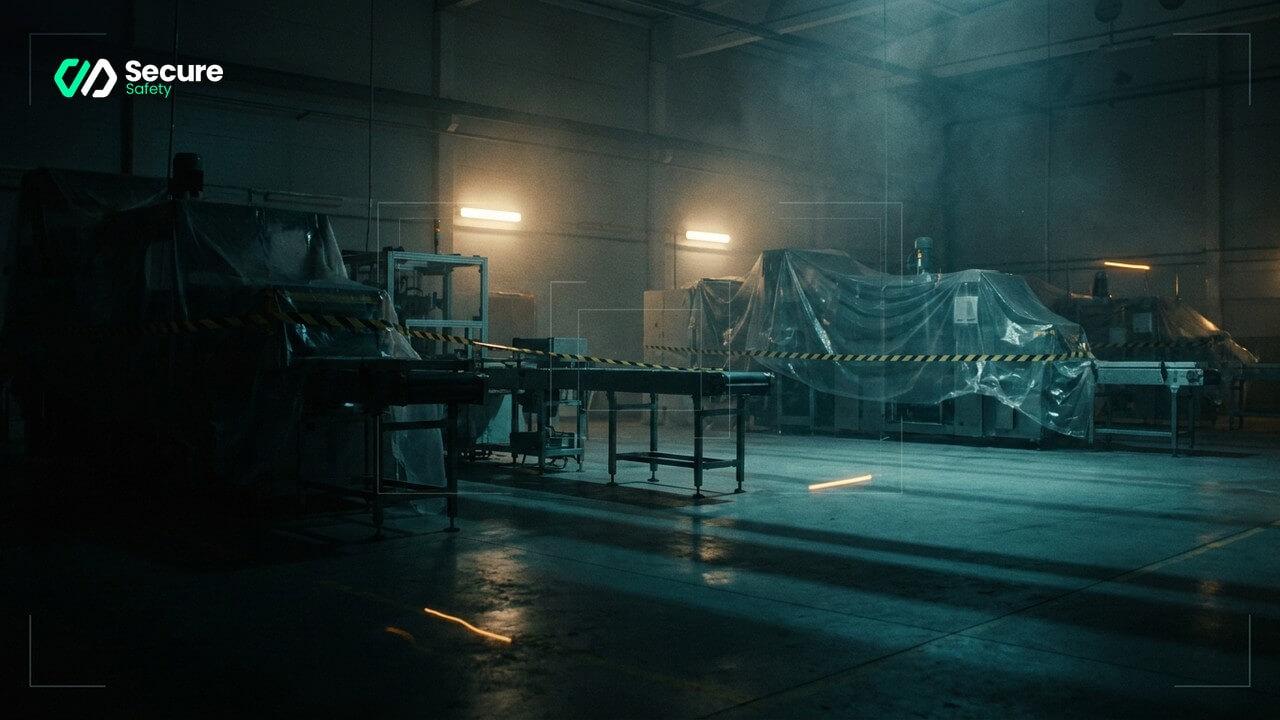
Every operations director knows the sound of a line going quiet. Not the ordinary hum of a shift change, but the wrong kind of silence — conveyors stilled, forklifts parked at odd angles, a knot of people gathered where they should not be. Somewhere down the aisle, a strip of hazard tape now cordons off a few square metres of floor that were, an hour ago, simply part of the working day.
An incident has happened. And the moment it did, a meter started running that will keep charging long after the ambulance has gone.
Most people, asked what a workplace incident costs, will reach for the fine. It is the number that makes the newspaper. But the fine is the smallest, latest and most visible part of the bill. The larger costs are quieter, they arrive sooner, and they are almost never written down in a single place where a board can see them. That is precisely why they are so dangerous.
The cost that starts before the fine
Study after study puts the same shape on the problem. The insured cost of an incident — the medical claim, the compensation, the eventual penalty — is the tip. Beneath it sits a body of uninsured cost several times larger: the lost production, the overtime to recover it, the retraining, the sick pay, the management hours consumed. The Health and Safety Executive has long argued the same point, and its own case studies routinely show hidden losses running to many times the visible ones.
The trouble is that these costs do not announce themselves. They dissolve into a dozen budget lines — maintenance, HR, agency labour, insurance renewal — where no single owner ever sees the total. So the organisation absorbs a very large number without ever quite naming it, and then wonders why margins are thin.
Let us name it. There are three costs worth counting, and each one is larger than it looks.
The first cost: downtime
When an incident occurs, the immediate area stops. Often the whole line stops, and sometimes the whole site. Production halts not for minutes but for hours, while the scene is preserved, the injured are treated and someone senior decides whether it is safe to resume.
For a mid-sized manufacturer, an hour of unplanned downtime is rarely a trivial figure — industry surveys routinely put it in the tens of thousands of pounds once you count idle labour, missed throughput and the knock-on to committed orders. A serious incident does not cost you an hour. It costs you the rest of the shift, and frequently the next one, while equipment is inspected and a method statement is rewritten.
Then comes the recovery tail. Orders slip. You pay overtime to catch up. A key machine may sit behind police or regulator tape for days. None of this appears on the incident report, yet all of it is a direct consequence of the incident. The safety incident downtime bill is usually the single biggest line, and the one least often measured.
The second cost: investigation
The line restarts, but the incident does not end. It moves into an office and becomes paperwork, interviews and meetings.
A proper investigation pulls your best people away from their real jobs for weeks. The safety manager leads it. Supervisors give statements. Engineers reconstruct what happened. Senior managers sit in review after review. If the authorities are involved, there are notifications, document requests and site visits, each one demanding hours of preparation from the people you can least spare.
The incident investigation cost is almost entirely a labour cost, and it is expensive labour. It is measured in the collective salary of everyone pulled off productive work, multiplied by the weeks the process runs — and multiplied again by the opportunity cost of what those people were not doing while they wrote statements and attended hearings.
And here is the quiet cruelty of it. Much of that investigation is spent simply trying to establish what happened. Where exactly was the pedestrian standing. How fast was the vehicle moving. Was the guard in place. Where CCTV exists at all, someone must scrub through hours of footage hoping the right camera caught the right second. That reconstruction, done by hand, is where the weeks go.
The third cost: reputation
The third cost is the hardest to quantify and the longest to repay. An incident travels. It travels to your workforce, who watch how you respond and adjust their trust accordingly. It travels to your customers, especially the large ones whose procurement teams audit your safety record before they renew. It travels to your insurer, who prices your next premium on your loss history. And increasingly it travels to the public, where a single enforcement notice is searchable forever.
Reputational risk safety is not an abstraction. It shows up as a contract you do not win because your incident rate failed a client's threshold. It shows up as a harder, costlier insurance renewal. It shows up in the recruitment market, where skilled people choose the employer with the better story. A fine is paid once. A damaged reputation is paid down slowly, over years, in deals that quietly go elsewhere.
Why prevention is the only cost that shrinks
Here is the arithmetic that matters. Every pound spent after an incident is spent on damage that has already been done. Only the money spent before an incident actually reduces the total. Prevention is the one line on the whole ledger that makes the others smaller.
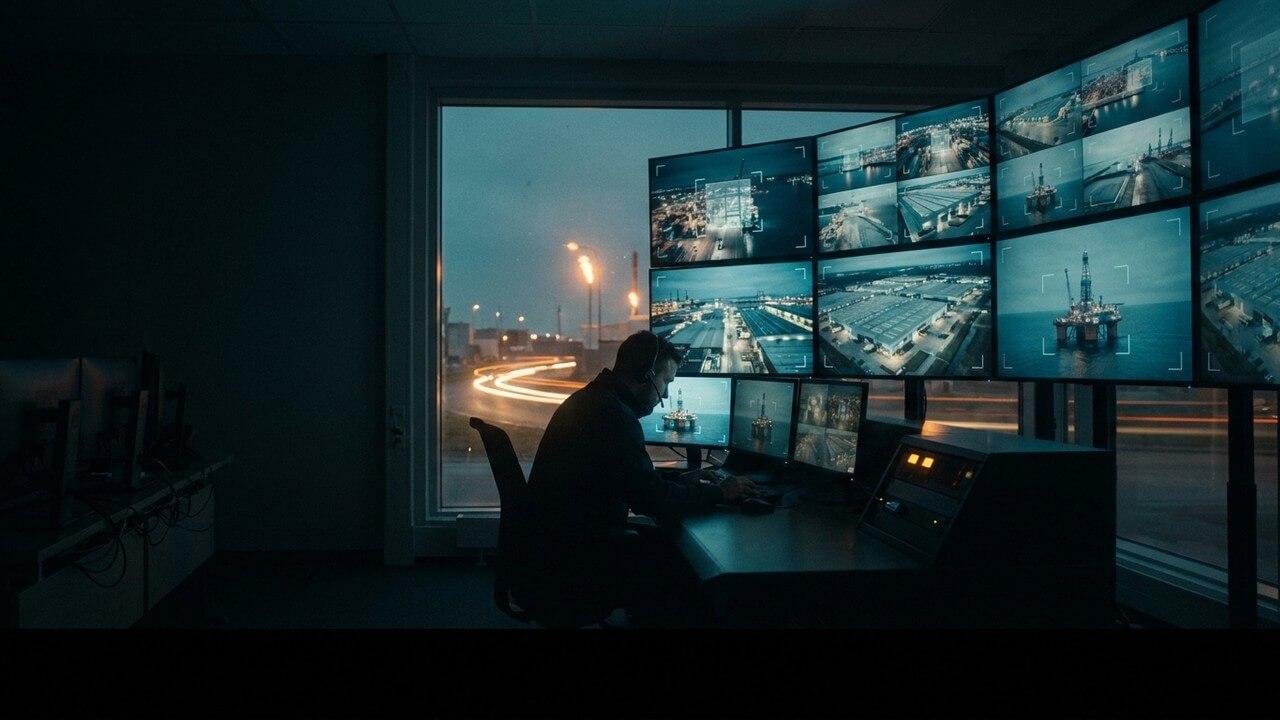
This is why continuous monitoring has become a serious commercial argument, not merely a safety one. Most sites are already watched by dozens of cameras that see everything and understand nothing — they record the incident faithfully and prevent none of them. An AI safety layer changes the tense. It watches the same feeds in real time and flags the vehicle drifting toward a walkway, the missing helmet, the person on the ground, the entry into a red zone — in the seconds before harm, while intervention is still possible.
Our own detection was not built in a laboratory. It was forged offshore, on the drill floor — heavy moving steel, no room for error, lives measured against every decision. It has since run in national oil-major operations, a major international port and an international airport, holding a sub-0.05% error rate and, where sites have measured it, cutting unsafe behaviours by around 90%. An environment that unforgiving teaches you to catch the moment before it becomes an incident, which is the only moment that saves money.
There is a second dividend, too. When an incident does occur, the same system that watches for hazards has already recorded, timestamped and indexed exactly what happened. The investigation that once took weeks of scrubbing footage becomes an afternoon of reviewing flagged events. The downtime shortens. The reputation is defended with facts rather than guesswork.
The number worth putting on the board
Add the three costs together — the halted line, the vanished management weeks, the contracts and premiums and trust — and the true price of an incident is many times the figure that reaches the press. Set beside that number, the cost of watching your existing cameras properly is modest, and it is the only spend on the list that shrinks all the others.
The incident you prevent is invisible. It leaves no report, no downtime, no headline. That is exactly why it is the cheapest one you will ever have.
The hidden costs that organisations consistently underestimate
Lost productivity beyond the injured worker
The immediate productivity loss from a workplace incident extends far beyond the injured worker's absence. The colleagues who witnessed the incident are affected, sometimes severely. The supervisor who was present during a serious incident often faces a period of reduced effectiveness. The site or production area that is closed for investigation loses output for hours or days. The HSE investigation that follows a RIDDOR-reportable incident draws on the time of managers, safety professionals, and legal counsel for weeks or months. None of these costs appear in the direct incident cost figures that most organisations track.
Reputation and contract pipeline
For businesses that tender for work — construction companies, specialist contractors, logistics operators, offshore service companies — a workplace fatality in the past five years is a pre-qualification disqualifier in most major client frameworks. The lost revenue from contracts not won is typically the largest single component of the total incident cost, and it is never visible in the incident cost analysis because it is counterfactual: the bids that were not shortlisted, the frameworks that were not entered, the relationships that were not started.
The insurance reset
Employer's liability insurance premiums are affected by the claims history in a way that most organisations understand in principle but underestimate in practice. A fatality or serious injury typically resets the premium at the next renewal and keeps it elevated for three to five years. The total premium uplift over that period is often larger than the direct HSE fine. Combined with the potential loss of competitive premiums that a clean record would have delivered, the insurance cost of a serious incident typically runs to six figures over the five-year premium cycle.
A practical framework for calculating your site's incident cost exposure
For a site with a known incident frequency and severity distribution, the total annualised cost of incidents can be estimated with reasonable accuracy using the following components:
- Direct incident costs: medical, first aid, investigation time, RIDDOR reporting, legal, temporary cover (typically tracked already)
- Indirect productivity costs: production shutdown, investigation-related management time, affected worker productivity (typically 3-10x direct costs by HSE estimate)
- Insurance cost trajectory: current premium vs. post-incident premium reset over 5 years, discounted to present value
- Contract and revenue exposure: estimate the revenue at risk in your forward pipeline if a fatality were to occur, adjusted by the probability of tender disqualification in your sector's client frameworks
- Replacement and retention costs: cost to replace workers who leave following a serious incident on site
The total figure for most industrial employers is significantly larger than the fine that drives board discussions about safety investment. Presenting this full ledger — not just the penalty — is the most effective way to frame the business case for preventive monitoring.
See what your cameras have been missing — book a demo.