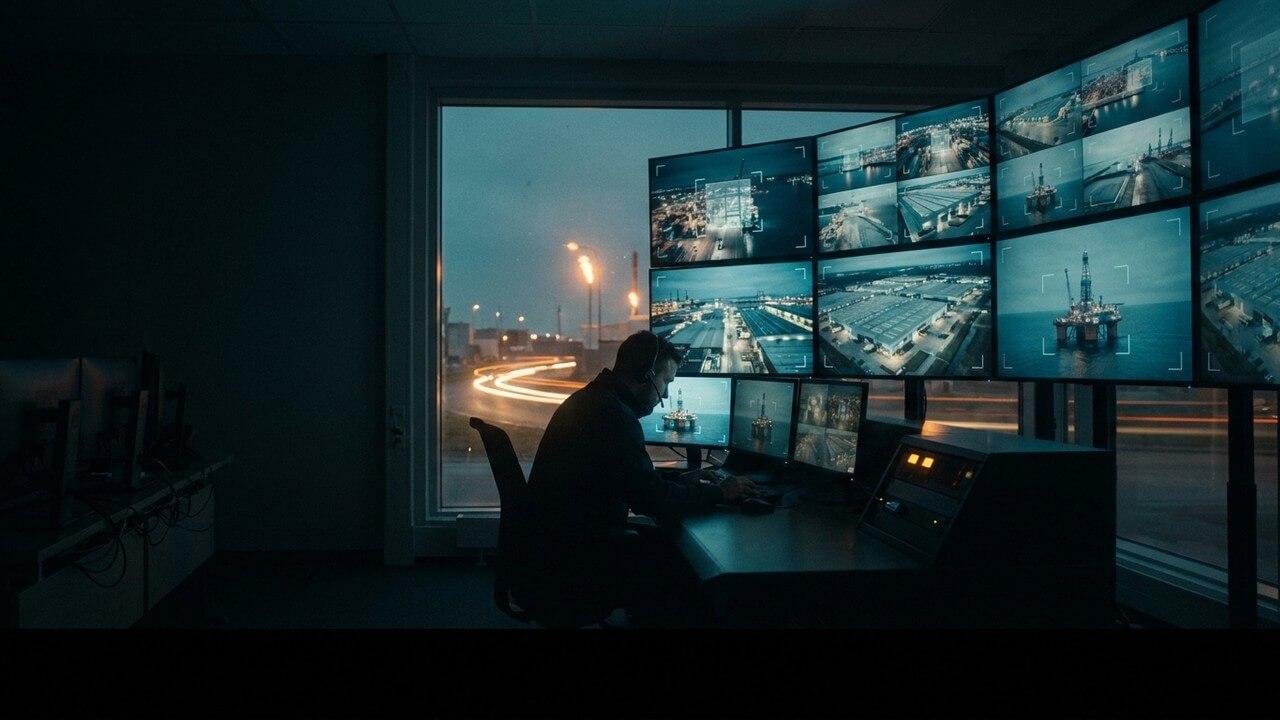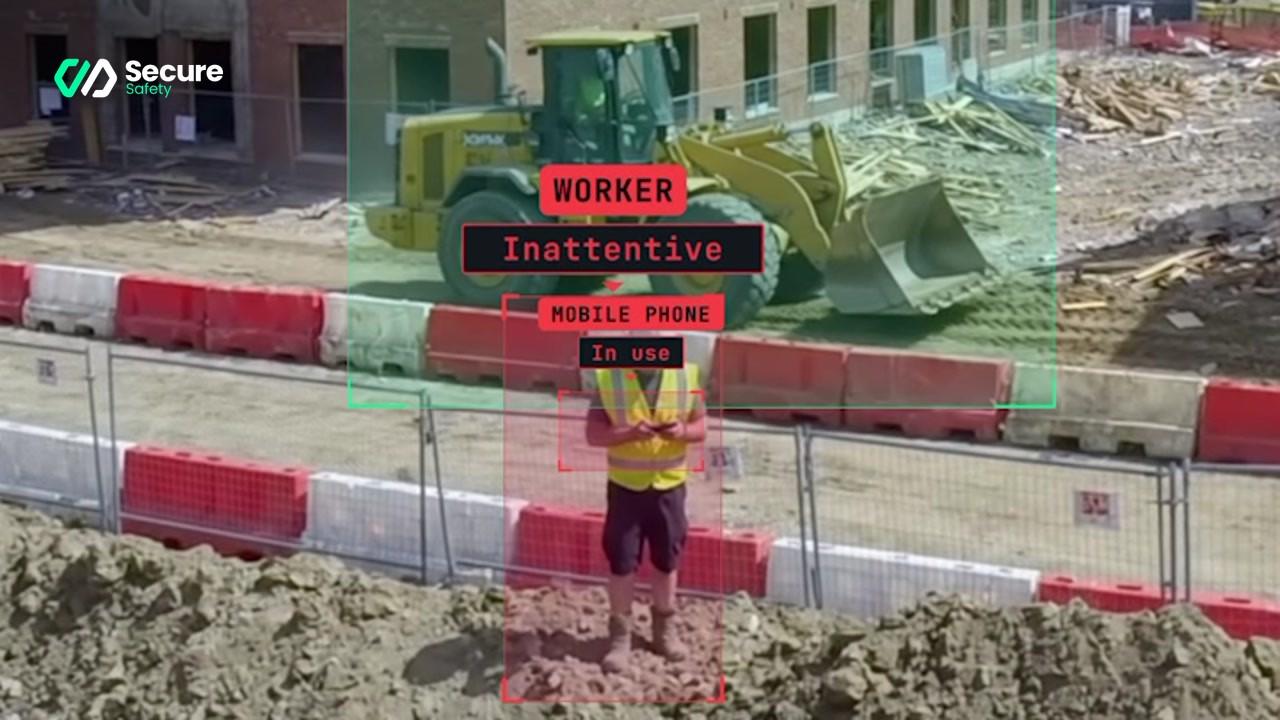
\"SecureSafety restricted-zone monitoring — zone activation that changes dynamically during SIMOPS.\"
The plant had been running the same configuration for eleven months. The safety team knew the hazard zones, the camera sight lines, the shift rhythms, and the faces. Then the turnaround began. Inside seventy-two hours, the workforce trebled. Three specialist contractor companies arrived on site simultaneously. Access routes that had been pedestrian thoroughfares became vehicle corridors. A vessel isolation required the creation of an exclusion zone in an area that had been a general-access walkway the previous day. Night work started on day two, and with it came lighting conditions no camera had been tested under.
By day four, two near-misses had been reported — both involving contractor workers unfamiliar with the changed site layout, both in areas that had been safe the previous week. The safety AI system that had run reliably for eleven months had not been reconfigured for the turnaround. Its zone rules were eleven months out of date.
Planned shutdowns and simultaneous operations (SIMOPS) represent the highest-risk periods in most industrial operations — not because the hazards are always more severe, but because the site changes faster than the safety management system keeps pace with. This article is about bridging that gap.
Why SIMOPS Is Uniquely Dangerous
The risk profile of a simultaneous operation is different in kind, not just degree, from normal site operations.
In steady-state operations, the site is largely predictable. Workers know the routes, the exclusion zones, the plant behaviour, and each other. Supervisors have built relationships and can read early warning signs in individual behaviour. The hazards are understood and the controls are embedded in site culture.
A shutdown or SIMOPS period changes all of this simultaneously:
Compressed time and overriding commercial pressure. A vessel that must be back online for a delivery deadline creates pressure that does not exist in routine operations. HSE's key messages on contractor safety — including guidance arising from its major hazard industries work — document how schedule pressure in high-hazard environments correlates with elevated incident rates. The turnaround window is, by definition, the period when pressure to complete work fast is at its peak.
Unfamiliar workforce at scale. A refinery with 200 permanent workers during normal operations may have 800 people on site during a turnaround, of whom 600 are contractors encountering the plant for the first time — or for the first time in this configuration. Site inductions cover the basics. They do not convey three days of changed access routes or a vessel isolation decided this morning.
Changed physical layout. Scaffolding goes up. Temporary exclusion zones are established around isolation points. Access routes are redirected around hot-work areas. The physical site that existed yesterday is not the physical site that exists today.
Night work. Turnarounds run continuously. Night-shift operations under temporary lighting, in unfamiliar terrain, with fatigued workers on extended rotations, create a risk combination that daytime operations rarely present. HSE's guidance on fatigue is explicit that working beyond twelve hours and at night substantially increases the probability of error.
Concurrent high-hazard activities. The whole point of SIMOPS is that multiple high-hazard activities run simultaneously — crane lifts, hot work, confined space entry, vessel pressurisation — in close physical proximity. The interactions between those activities, not the individual activities themselves, are where unanticipated incidents occur.
The Offshore Installations (Prevention of Fire and Explosion, and Emergency Response) Regulations 1995 — developed directly in response to the Piper Alpha disaster — place specific obligations on duty holders to manage simultaneous operations on offshore installations, including requirements for a formal SIMOPS permit system and documented management of the interfaces between concurrent operations. The same logic, and broadly the same duty of care under the Health and Safety at Work etc. Act 1974, applies onshore, even where the regulatory requirement is less prescriptive in form.
Why Standard Safety AI Configurations Fail During SIMOPS
A safety AI system built for steady-state operations has its logic baked into its configuration. The zone boundaries, the PPE rules, the vehicle speed limits, the occupancy thresholds — all of these are calibrated for the site as it normally operates.
When the site changes, the configuration does not automatically update. The exclusion zone now covering the vessel isolation point is not in the system's map unless someone loaded it there. Contractor workers wearing different-coloured coveralls from the resident workforce may confuse a colour-coded PPE detection scheme calibrated for permanent staff. The camera that used to watch an empty walkway now watches a high-traffic access route for three scaffold gangs simultaneously.
More subtly: the system's alert thresholds and occupancy models were trained on normal site data. A turnaround generates activity patterns — high occupancy in areas normally empty, vehicle movements at unusual times, workers congregating near new access points — that may suppress alerts that should fire, or generate alerts that should not.
A safety AI system that is not actively managed through a SIMOPS period is not providing the safety coverage it appears to provide. It is providing coverage of the site as it was, not the site as it is. That distinction matters most at the moment when it matters most.
Dynamic Zone Management: Pre-Configuring for the Site You Will Have
The most important capability for SIMOPS management in a safety AI platform is the ability to pre-configure zone changes in advance and activate them automatically at scheduled times.
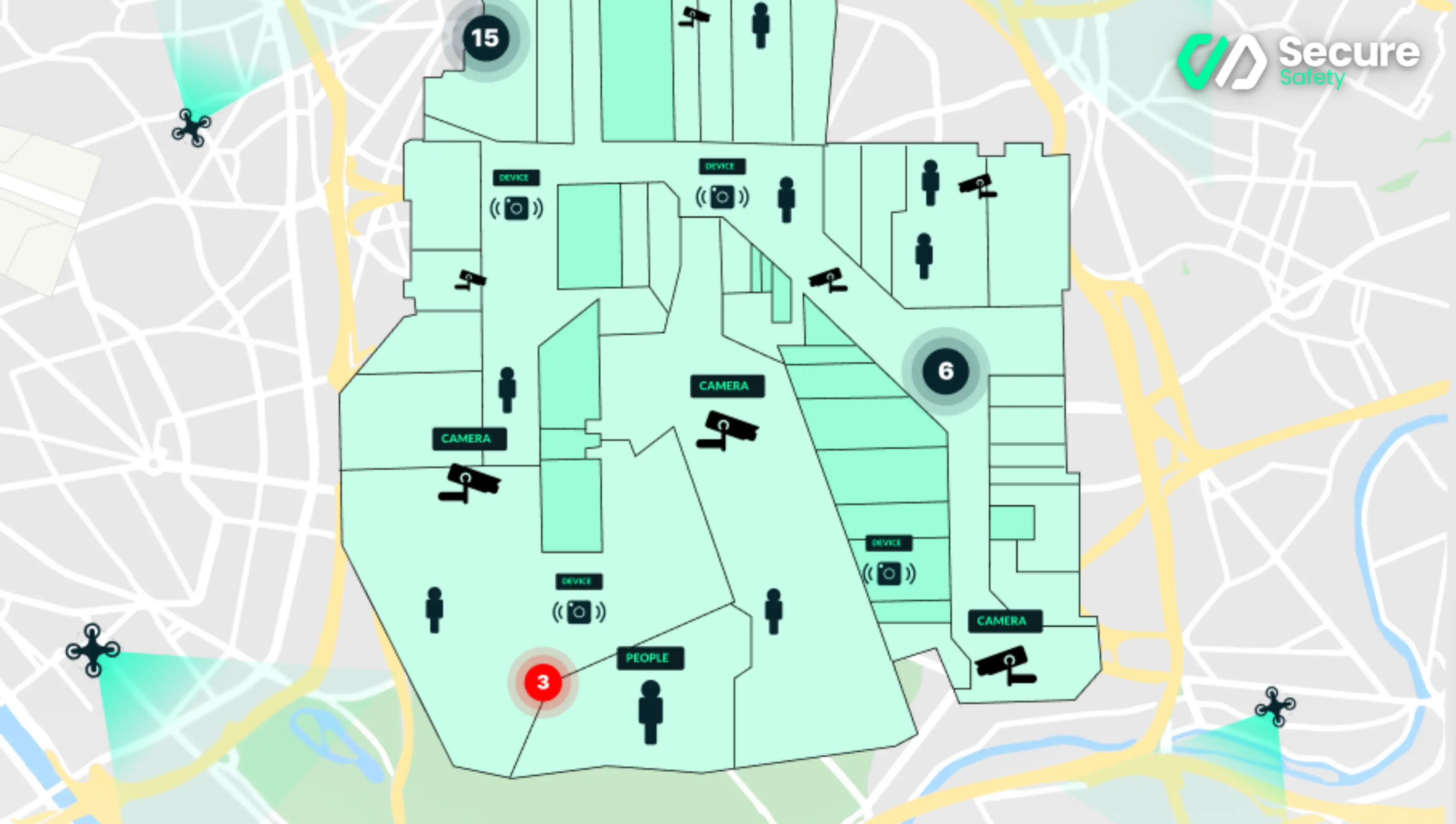 The SecureSafety live site map showing zone boundaries that can be pre-scheduled for activation during specific SIMOPS phases — control room operators see every zone status in real time.
A well-managed turnaround does not improvise its exclusion zones on the day. The SIMOPS plan — developed in the weeks before the shutdown — identifies which areas will be under hot-work permits, which vessel isolations require exclusion zones, where scaffolding will be erected, and when each stage of the turnaround will change the physical site layout.
The SecureSafety live site map showing zone boundaries that can be pre-scheduled for activation during specific SIMOPS phases — control room operators see every zone status in real time.
A well-managed turnaround does not improvise its exclusion zones on the day. The SIMOPS plan — developed in the weeks before the shutdown — identifies which areas will be under hot-work permits, which vessel isolations require exclusion zones, where scaffolding will be erected, and when each stage of the turnaround will change the physical site layout.
That planning information should map directly into the safety AI configuration:
Timed zone activation. An exclusion zone around a vessel isolation can be set to activate at 06:00 on the day the isolation begins and deactivate when the isolation is formally certified clear. The system enforces the zone from the moment it activates, without requiring manual configuration on the morning the job starts.
Contractor workforce modes. Where the turnaround brings workers whose PPE colour scheme differs from the resident workforce — which is common when multiple specialist contractors arrive simultaneously — the system's PPE rules can be switched to a turnaround mode applying appropriate verification logic for the mixed workforce profile.
Occupancy thresholds. Areas that are normally low-occupancy may be high-occupancy during specific turnaround phases. Thresholds should be updated to reflect the expected headcount in each area at each phase of the work plan, so genuine crowding events generate alerts while normal turnaround activity does not create a barrage of false positives.
Vehicle exclusion updates. Traffic management during a turnaround is typically different from normal site vehicle routing. Updated vehicle exclusion zones, revised speed limit areas, and changed pedestrian crossing points should be loaded before the turnaround begins, not retrofitted after the first near-miss.
The planning discipline required to do this well — mapping the SIMOPS plan to the AI configuration before work starts — is identical to the discipline required for a well-run permit-to-work system. The two processes should run in parallel, with the safety AI configuration treated as a live document that reflects the current authorised state of the site.
Managing PPE Verification for an Unfamiliar Workforce
One of the most consistent findings in post-incident investigations involving contractor workers is that PPE compliance is lower among people who do not know the site well, who are unfamiliar with site-specific PPE rules, or who are working under schedule pressure in an environment that does not feel like their normal workplace.
AI PPE verification does not depend on knowing the worker. It checks every person in frame against the rule for the zone they are in, regardless of their employer, their site induction date, or how many previous visits they have made. This is its primary advantage during a turnaround: the monitoring baseline does not change when the workforce triples.
For a multi-contractor turnaround, the practical requirements are:
Define the PPE rule for each zone before the contractor workers arrive. If the hot-work exclusion zone requires specific PPE — particular coverall type, glove standard, face shield — that rule must be loaded into the system before day one.
Test detection against the PPE types the contractors will actually wear. Different contractors use different PPE brands, colours, and styles. If your permanent workforce wears red hard hats and your turnaround contractors wear white, the detection logic must handle both correctly. A pre-mobilisation camera review against representative contractor PPE samples is the practical way to confirm this.
Brief contractors at induction that AI PPE monitoring is active. This is both ethically correct and operationally effective. Workers who know that PPE compliance is monitored continuously comply more consistently. The Provision and Use of Work Equipment Regulations 1998 (PUWER) requires that workers using or affected by work equipment receive adequate health and safety information; automated safety monitoring falls within the scope of information workers are entitled to know about.
Using Occupancy Counting for Permit-to-Work Area Control
A confined space entry permit limits the number of workers who may be inside the space simultaneously — because the atmospheric monitoring equipment, the rescue procedure, and the communication capability are all sized to that maximum. Exceeding it is not a technical violation; it is a direct risk to everyone in the space.
Manual headcounting at a confined space entry point depends on the attendant being present and paying attention throughout the shift. AI occupancy monitoring provides an automated, continuous count of people entering and exiting the permitted area, and alerts the attendant when the permitted maximum is approached or exceeded.
For general permit-to-work area control — a hot-work zone, a scaffolding build area, a vessel pressurisation exclusion zone — occupancy monitoring provides the control room with a real-time picture of where people are during the turnaround. This is exactly the situational awareness that SIMOPS management depends on and which manual supervision cannot reliably provide across a site with hundreds of concurrent workers.
Coordinating AI Monitoring with PTW and LOTO Systems
Safety AI monitoring and permit-to-work systems serve different but complementary functions. The PTW system is the document and authorisation layer: it establishes that the work has been planned, the isolation is in place, the hazards have been assessed, and the correct people have given and received authorisation. The AI monitoring layer provides real-time verification that the physical site matches the permit conditions.
The most valuable integration between the two is temporal: when a permit is issued, the associated zone restrictions should be active in the AI system. When a permit is closed out, the zone should revert to its normal configuration. Ideally this happens automatically through a lightweight integration between the PTW software and the AI platform. At minimum, it happens through a defined operational procedure that makes zone updates part of the permit issue and close-out workflow — not an afterthought.
Lockout/tagout (LOTO) procedures under the Provision and Use of Work Equipment Regulations 1998 create a specific monitoring need. While an energy isolation is in place, the isolated equipment should sit within a restricted zone that the AI monitors for unauthorised approach. If a worker approaches an isolated but not yet fully cleared machine — during the post-maintenance phase before the LOTO is formally removed — the system generates an alert. This is one of the higher-consequence scenarios that AI monitoring can meaningfully support during a turnaround, and one that purely procedural controls frequently fail to catch.
SIMOPS Preparation Checklist for Safety AI
Four weeks before turnaround:
- Map all planned exclusion zones, hot-work areas, scaffolding locations, and changed access routes against the current camera layout
- Identify camera blind spots created by the turnaround layout and determine whether temporary camera repositioning is required
- Define the PTW-linked zone activation schedule: which zones activate when, based on the SIMOPS plan
- Document contractor PPE requirements by zone and verify detection compatibility against representative contractor PPE samples
Two weeks before turnaround:
- Pre-configure all new zone boundaries, occupancy thresholds, and PPE rules in the AI platform in test mode
- Run a simulation test of zone activations against the scheduled timeline
- Brief the control room team and supervisors on the turnaround monitoring configuration and changed alert routing
- Confirm escalation contacts are updated for the turnaround shift pattern and supervision structure
Day before turnaround:
- Activate the turnaround configuration in the AI platform
- Verify all zone activations and camera feeds are working correctly
- Conduct a camera walk-around against the physically marked exclusion zones on site — if the boundary on the ground does not match the camera zone configuration, the zone configuration is wrong
- Confirm the first-response procedures for high-severity AI alerts during the turnaround period
During the turnaround:
- Review the previous day's AI event log at each shift handover
- Update zone boundaries in real time when the SIMOPS plan changes — the AI configuration is a live safety document, not a one-time setup
- Use occupancy counts to support permit-to-work area control at key confined space and hot-work locations
- Investigate any alert patterns suggesting workers consistently entering restricted zones — this typically indicates a signage or briefing gap rather than individual non-compliance
At close of turnaround:
- Revert zone configurations to the steady-state operational setup and verify through a camera walk-around
- Review the turnaround event data for patterns relevant to the next planned shutdown: which zones had the most incidents, which contractor cohort had the most PPE alerts, which time periods were highest-risk
- Update the SIMOPS AI configuration template for the next turnaround, incorporating lessons from this one
Offshore Proof in the Highest-Stakes SIMOPS Environment
Offshore oil and gas platform shutdowns — for well intervention, equipment exchange, or major maintenance — represent some of the most complex simultaneous operations in any industry. Multiple contractor disciplines working in close proximity, confined deck space, night operations, and weather-dependent crane lifts create a SIMOPS risk profile that exceeds most onshore equivalents.
SecureSafety has supported offshore SIMOPS monitoring since 2018, across thirteen platforms, including periods of planned maintenance with expanded contractor workforces, changed deck access routes, and concurrent crane operations over live work areas. The discipline of pre-configuring the monitoring environment for the site you will have — not the site you normally have — is as important on a North Sea platform as it is in an onshore refinery or chemical plant. The technology is robust. The planning is where the difference is made.
If your organisation has a planned shutdown in the next twelve months and wants to understand how to configure AI monitoring for the SIMOPS period specifically, book a demo and we will walk through your turnaround plan in detail.